
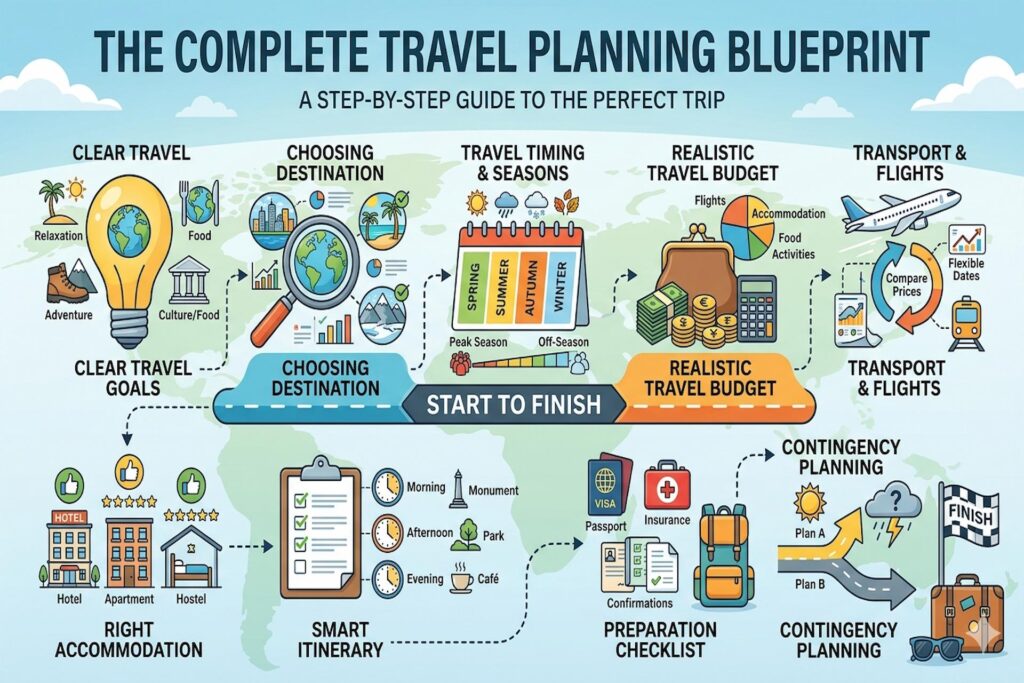
Planning a trip feels exciting, but it can quickly become overwhelming without a clear system. This guide breaks travel planning into simple steps—from choosing destinations to building itineraries and managing costs. You’ll learn how to plan smarter, avoid common mistakes, and create smooth, memorable journeys from start to finish.
Start With Clear Travel Goals
Every successful trip begins with intention. Before looking at destinations, decide what you actually want from the journey. Some people want relaxation. Others want adventure, culture, or food experiences.
This step helps you filter options quickly. A beach escape in Thailand and a hiking trip in Switzerland require very different planning styles. Without clarity, you may end up with a trip that feels scattered instead of meaningful.
Write down three priorities:
- Relaxation or activity level
- Budget range
- Travel duration
These simple inputs shape everything that follows in your travel planning guide.
Key Takeaways
- Clear travel goals help you choose the right destination faster.
- travel itinerary planning prevents wasted time and missed experiences.
- Budgeting early reduces stress and unexpected expenses during the trip.
- Seasonal timing plays a major role in cost and travel experience.
- Smart booking strategies help secure better prices and availability.
- Backup plans protect your trip from delays, cancellations, and surprises.
Choosing the Right Destination
Once goals are clear, start comparing destinations. Instead of browsing randomly, narrow your search using practical filters like weather, safety, budget, and travel time.
Good destination research strategies include:
- Reading recent traveler reviews
- Checking seasonal weather patterns
- Comparing cost of living across locations
- Looking at visa requirements early
For example, Southeast Asia is often budget-friendly but weather-sensitive. Europe offers cultural depth but requires higher budgeting. Matching destination traits with your goals ensures a smoother experience.
Understanding Travel Timing and Seasons
Timing can completely change your travel experience. The same place can feel very different during peak and off-season periods.
Peak season offers:
- Better weather
- More activities
- Higher prices and crowds
Off-season offers:
- Lower costs
- Fewer crowds
- Limited activity availability
Choosing the right travel window is part of an effective trip planning framework. A well-timed trip often feels more enjoyable without increasing effort or budget.
Building a Realistic Travel Budget
Budgeting is one of the most important parts of planning. Many travelers underestimate daily costs, especially transportation, food, and local experiences.
A simple breakdown helps:
- Flights or transport
- Accommodation
- Daily food expenses
- Activities and tickets
- Emergency buffer (10–15%)
This structure prevents overspending and supports better decisions. A strong travel budgeting strategy also helps you compare destinations more accurately.
For example, two destinations may look similar in flight cost but differ heavily in daily expenses.
Booking Transportation the Smart Way
Flights and transport should be booked after destination and timing decisions are locked. Booking too early without clarity can limit flexibility.
Smart booking practices include:
- Comparing prices across multiple platforms
- Checking flexible date options
- Setting fare alerts
- Reviewing layover durations carefully
Avoid choosing flights only based on price. Long layovers or poor timing can affect the entire trip flow.
Efficient flight and transport planning ensures smoother travel days and less stress during transitions.
Choosing the Right Accommodation
Accommodation affects comfort, location access, and daily convenience. Instead of only focusing on price, consider how it fits into your itinerary.
Key factors:
- Distance from main attractions
- Public transport access
- Safety of the area
- Reviews from recent travelers
Hotels offer convenience, while Airbnb-style stays offer space and flexibility. Hostels can be budget-friendly for solo travelers.
Strong accommodation comparison planning helps balance comfort with cost.
Building a Smart Itinerary
A well-structured itinerary is the backbone of a good trip. However, overpacking your schedule is one of the most common mistakes.
A balanced itinerary should include:
- One major activity per half-day
- Buffer time for delays or rest
- Flexible slots for spontaneous exploration
This is where travel itinerary planning becomes essential. Overplanned days lead to exhaustion, while underplanned days lead to missed opportunities.
Think of your itinerary as a guide, not a strict schedule.
Travel Documents and Preparation Checklist
Before departure, ensure all documents are in order. Missing paperwork can disrupt even the best-planned trips.
Essential items include:
- Passport and visa (if required)
- Travel insurance
- Booking confirmations
- Digital and printed copies of documents
Also, prepare practical essentials:
- Currency or forex card
- Local SIM or roaming plan
- Emergency contacts
This stage is often overlooked but plays a key role in stress-free travel.
Avoiding Common Travel Planning Mistakes
Even experienced travelers make planning errors. The most common ones include:
- Overbooking activities with no rest time
- Ignoring travel time between locations
- Underestimating local transport delays
- Not checking seasonal closures
Avoiding these mistakes improves the quality of your entire trip. A flexible mindset often leads to better experiences than a rigid schedule.
Contingency Planning for Smooth Travel
Good travel planning always includes backup options. Delays, cancellations, and weather changes can happen at any time.
A solid contingency plan includes:
- Alternative activities for rainy days
- Backup accommodation options
- Flexible transportation choices
- Emergency fund for unexpected costs
This is where smart travel planning system becomes valuable. Prepared travelers adapt quickly and continue enjoying their trip without major disruption.
Real-World Planning Timeline Example
Here is a simple timeline for a 3-month travel preparation cycle:
- Month 3: Choose a destination and set a budget
- Month 2: Book flights and accommodation
- Month 1: Finalize itinerary and activities
- Week before travel: Confirm documents and packing
This step-by-step structure helps avoid last-minute pressure and improves decision-making.
Final Thoughts
A well-planned trip is not about perfection. It is about balance, clarity, and flexibility. When you align your goals, budget, timing, and itinerary, travel becomes smoother and far more enjoyable.
Each stage of planning builds confidence. And once everything is in place, the journey feels less like coordination work and more like experience gathering.