
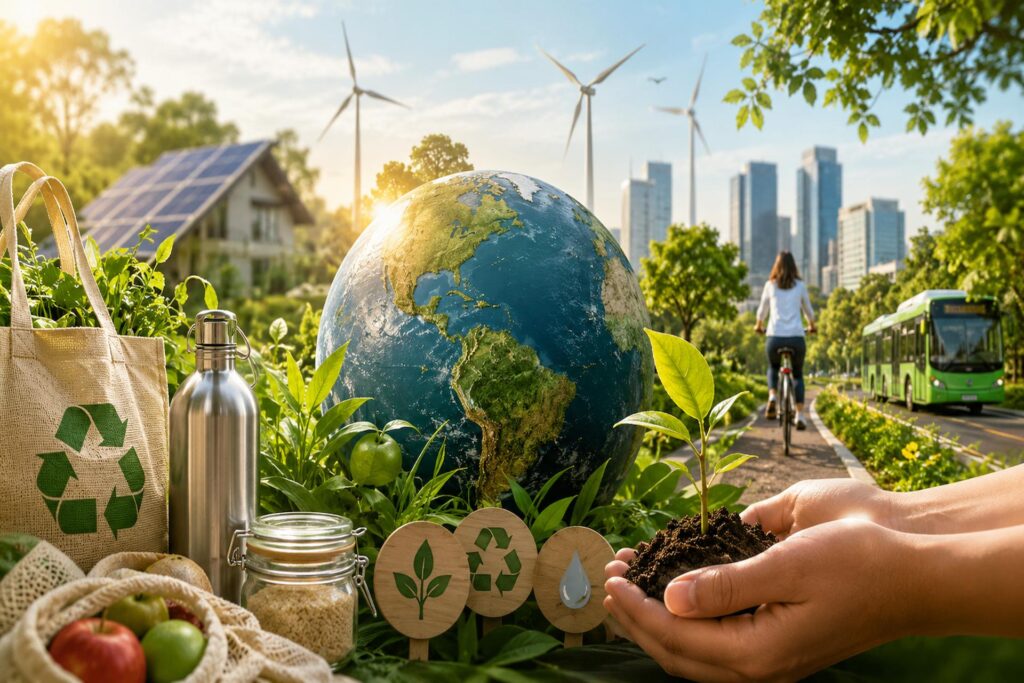
Sustainability often appears in headlines, marketing campaigns, and social media discussions. Yet real environmental progress rarely comes from short-lived trends. It comes from consistent habits, thoughtful decisions, and long-term commitment.
The good news is that sustainable living does not require dramatic lifestyle changes. Small actions, repeated over time, can reduce environmental impact while often saving money, improving health, and strengthening communities. Whether it’s reducing waste, conserving energy, choosing sustainable transportation, or supporting responsible businesses, everyday decisions matter.
This guide explores practical sustainability habits that go beyond trends and create meaningful environmental benefits for individuals, businesses, and society as a whole.
Understanding Sustainable Living
Sustainable living means meeting current needs without compromising the ability of future generations to meet theirs. It involves using resources responsibly while minimizing harm to ecosystems, wildlife, and natural resources.
The concept gained global attention during environmental movements of the 1960s and 1970s. Concerns about pollution, deforestation, biodiversity loss, and resource depletion encouraged governments, businesses, and citizens to rethink consumption patterns.
Today, sustainability encompasses several interconnected areas:
- Energy efficiency
- Waste reduction
- Water conservation
- Sustainable transportation
- Responsible consumption
- Food sustainability
- Climate action
- Circular economy practices
Rather than focusing on perfection, sustainable living encourages continuous improvement and mindful decision-making.
Why Everyday Choices Matter
Many people assume environmental problems can only be solved through government regulations or major corporate initiatives. While large-scale action is essential, individual choices collectively create significant impact.
Consider simple examples:
- Millions of households reducing energy consumption lowers demand on power grids.
- Choosing reusable products reduces landfill waste.
- Supporting sustainable businesses influences market demand.
- Reducing food waste decreases pressure on agricultural systems.
Environmental progress is often the result of many small actions occurring simultaneously across communities and economies.
The Evolution of Environmental Awareness
Environmental concerns are not new. Throughout history, societies have faced challenges related to resource management and environmental degradation.
In the twentieth century, industrial growth brought prosperity but also increased pollution and resource consumption. Public awareness grew through scientific research, conservation efforts, and environmental advocacy.
Important milestones included:
- Expansion of national parks and protected areas
- Clean air and water legislation
- Recycling programs
- Renewable energy development
- International climate agreements
- Sustainable development initiatives
These efforts helped shift sustainability from a niche concern to a mainstream priority.
Energy Conservation: The Foundation of Sustainable Living
Energy production remains one of the largest sources of greenhouse gas emissions worldwide. Reducing unnecessary energy use is among the simplest and most effective sustainability practices.
Practical Energy-Saving Habits
- Switch off lights when leaving a room.
- Use energy-efficient LED lighting.
- Unplug devices not in use.
- Improve home insulation.
- Use programmable thermostats.
- Choose energy-efficient appliances.
- Maximize natural light whenever possible.
These actions may seem minor individually, but their cumulative impact can be substantial over time.
Renewable Energy and Household Choices
Many households now have access to renewable energy options, including:
- Solar power systems
- Community solar programs
- Renewable electricity plans
- Energy storage technologies
As renewable energy becomes more accessible, households can further reduce their environmental footprint while increasing energy resilience.
Waste Reduction: Moving Beyond Disposable Culture
Modern economies generate enormous amounts of waste. Much of it comes from products designed for short-term use.
Reducing waste starts with changing purchasing habits rather than focusing solely on disposal methods.
The Five R’s of Waste Reduction
- Refuse unnecessary items.
- Reduce consumption.
- Reuse products whenever possible.
- Recycle responsibly.
- Rot organic materials through composting.
Following this hierarchy often prevents waste before it is created.
Common Waste Reduction Strategies
- Carry reusable shopping bags.
- Use refillable water bottles.
- Choose durable products.
- Repair items before replacing them.
- Buy products with minimal packaging.
- Donate usable goods instead of discarding them.
The most sustainable product is often the one that already exists.
Sustainable Transportation Choices
Transportation significantly contributes to carbon emissions. While not every person has access to the same transportation options, many can make adjustments that reduce environmental impact.
Lower-Impact Transportation Methods
- Walking
- Cycling
- Public transportation
- Carpooling
- Remote work when appropriate
- Electric vehicles
- Hybrid vehicles
Even replacing a few car trips each week with alternative transportation can reduce fuel consumption and emissions.
Designing More Sustainable Communities
Community planning plays a major role in transportation sustainability. Walkable neighborhoods, bike lanes, public transit systems, and mixed-use developments help residents reduce dependence on personal vehicles.
This highlights an important reality: sustainability is not solely an individual responsibility. Infrastructure and policy influence environmental outcomes as well.
Responsible Consumption and Mindful Purchasing
Many environmental impacts occur long before products reach consumers. Resource extraction, manufacturing, transportation, and packaging all require energy and materials.
Responsible consumption focuses on buying thoughtfully rather than buying more.
Questions to Ask Before Purchasing
- Do I truly need this item?
- Can I borrow or rent it instead?
- Is there a durable alternative?
- Can it be repaired?
- Is it made responsibly?
- What happens when it reaches the end of its life?
These simple questions encourage more sustainable decision-making.
Quality Over Quantity
Fast consumption often leads to increased waste and resource use. Investing in durable products may cost more initially but often reduces long-term environmental and financial costs.
Sustainable Food Systems and Environmental Impact
Food production affects land use, water resources, biodiversity, and greenhouse gas emissions. Sustainable food choices can significantly reduce environmental pressure.
Practical Food Sustainability Habits
- Plan meals carefully.
- Reduce food waste.
- Store food properly.
- Support local producers when possible.
- Choose seasonal foods.
- Compost food scraps.
- Grow herbs or vegetables at home.
The Problem of Food Waste
A significant portion of food produced globally is never consumed. Food waste represents wasted water, energy, labor, and agricultural resources.
Simple planning and better storage practices can make a meaningful difference.
Water Conservation for Long-Term Sustainability
Freshwater resources are increasingly strained by population growth, agriculture, industry, and climate change.
Conserving water helps protect ecosystems and ensures future availability.
Everyday Water-Saving Practices
- Fix leaks promptly.
- Install water-efficient fixtures.
- Take shorter showers.
- Use full loads in washing machines.
- Collect rainwater where permitted.
- Choose drought-tolerant landscaping.
These actions reduce water demand without sacrificing comfort or convenience.
Understanding the Circular Economy
Traditional economic systems often follow a linear model:
Take → Make → Use → Dispose
The circular economy seeks to break this cycle by keeping products and materials in use for as long as possible.
Circular Economy Principles
- Design for durability.
- Repair instead of replace.
- Reuse materials.
- Remanufacture products.
- Recycle efficiently.
- Reduce waste generation.
Many businesses are adopting circular practices through product take-back programs, repair services, and recyclable packaging initiatives.
Common Misconceptions About Sustainable Living
Myth 1: Sustainability Is Expensive
Many sustainable habits save money over time through lower energy bills, reduced waste, and smarter purchasing decisions.
Myth 2: Individual Actions Don’t Matter
Collective action begins with individual choices. Consumer demand often drives market and policy changes.
Myth 3: Sustainable Living Requires Perfection
Sustainability is about progress, not perfection. Consistent improvements are more effective than unrealistic expectations.
Myth 4: Recycling Alone Solves Waste Problems
Recycling is valuable, but reducing and reusing are generally more effective strategies.
The Role of Businesses in Sustainability
Businesses influence environmental outcomes through product design, supply chains, energy use, packaging, and transportation.
Responsible companies increasingly focus on:
- Sustainable sourcing
- Energy efficiency
- Waste reduction
- Emissions management
- Ethical supply chains
- Product durability
Consumers can support these efforts by purchasing from organizations committed to measurable sustainability goals.
Why Public Policy Matters
Individual and corporate actions are important, but large-scale environmental progress often requires supportive policies.
Effective public policies can encourage:
- Renewable energy adoption
- Clean transportation infrastructure
- Water conservation
- Waste reduction programs
- Sustainable agriculture
- Biodiversity protection
Successful environmental solutions typically combine personal responsibility, business innovation, and government leadership.
Community-Based Sustainability Initiatives
Communities often achieve results that individuals cannot accomplish alone.
Examples include:
- Community gardens
- Local recycling programs
- Urban tree planting projects
- Renewable energy cooperatives
- Water conservation campaigns
- Shared transportation systems
These initiatives strengthen both environmental outcomes and social connections.
Building Sustainable Habits That Last
Lasting environmental impact comes from habits that fit naturally into daily life.
A Simple Approach
- Start with one or two changes.
- Focus on consistency.
- Track progress.
- Involve family members.
- Learn continuously.
- Celebrate small wins.
Sustainability works best when it becomes part of everyday routines rather than a temporary challenge.
The Future of Sustainable Living
Environmental challenges will continue to evolve, but so will solutions. Advances in renewable energy, sustainable agriculture, green building, circular economy systems, and resource-efficient technologies offer reasons for optimism.
The most important lesson is that sustainability is not a destination. It is an ongoing process of making better choices, improving systems, and balancing environmental responsibility with economic and social well-being.
By focusing on practical habits rather than temporary trends, individuals, businesses, and communities can create lasting environmental impact that benefits both current and future generations.
Frequently Asked Questions
1. What is sustainable living?
Sustainable living means using resources responsibly and reducing environmental impact while supporting long-term ecological, economic, and social well-being.
2. What is the easiest way to start living sustainably?
Begin by reducing waste, conserving energy, and making mindful purchasing decisions that prioritize durability and responsible production.
3. Does sustainable living save money?
Yes. Many sustainable habits, such as reducing energy use and avoiding unnecessary purchases, lower long-term household expenses.
4. Why is reducing food waste important?
Reducing food waste conserves water, energy, land, and labor while lowering greenhouse gas emissions from discarded food.
5. How can communities support sustainability?
Communities can promote recycling, public transportation, local food systems, renewable energy projects, and environmental education programs.
Summing Up
Sustainable living is most effective when it moves beyond trends and becomes part of daily life. Small, practical actions—whether conserving energy, reducing waste, choosing sustainable transportation, or supporting responsible businesses—create meaningful change over time. Combined with corporate accountability and strong public policy, these habits help build a healthier, more resilient future for everyone.