
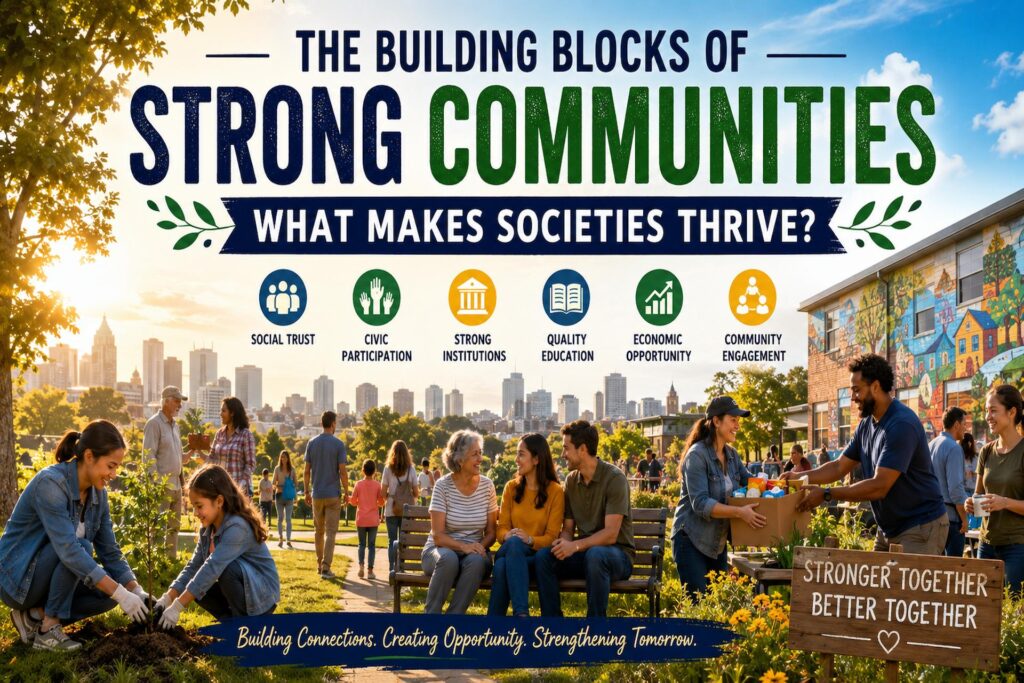
Communities are the foundation of human society. They shape how people live, work, learn, and support one another. Whether in a small rural town, a busy city neighborhood, or an online network connected across continents, strong communities provide stability, opportunity, and a sense of belonging.
Throughout history, societies that flourished often shared common characteristics. They built trust among citizens, invested in education, created economic opportunities, encouraged civic participation, and maintained institutions that people respected. While technology, politics, and cultures have changed over time, the principles behind thriving communities remain remarkably consistent.
Understanding these building blocks helps individuals, organizations, and policymakers create places where people can prosper together. It also offers valuable lessons for addressing modern challenges such as social isolation, economic inequality, and declining civic engagement.
Why Strong Communities Matter
Strong communities improve quality of life in countless ways. They support economic growth, enhance public safety, encourage innovation, and promote physical and mental well-being.
When people feel connected to those around them, they are more likely to help neighbors, volunteer, participate in local activities, and contribute to shared goals. These actions create a positive cycle that strengthens social cohesion and community resilience.
Research consistently shows that communities with high levels of social trust often experience lower crime rates, better health outcomes, stronger local economies, and greater overall happiness.
Simply put, thriving societies are built on relationships as much as resources.
Social Trust: The Invisible Foundation
One of the most important ingredients in a successful community is trust.
Social trust refers to the belief that other people will generally act honestly, fairly, and responsibly. When trust exists, daily interactions become easier and more productive. People are more willing to collaborate, share information, and work together to solve problems.
Communities with strong social trust often experience:
- Greater cooperation among residents
- Higher volunteer participation
- More effective local governance
- Stronger support networks
- Improved public safety
Trust develops over time through consistent positive experiences. Transparent institutions, reliable public services, fair laws, and active community engagement all contribute to building trust.
Once lost, however, trust can be difficult to rebuild. That is why maintaining accountability and openness remains essential for long-term community success.
Civic Participation Creates Stronger Societies
Healthy communities depend on active citizens.
Civic participation includes activities such as voting, attending public meetings, volunteering, supporting local organizations, and engaging in community projects. These actions give people a voice in shaping the places where they live.
Communities benefit when residents move beyond being observers and become participants.
Examples of civic engagement include:
- Joining neighborhood associations
- Supporting local charities
- Participating in town hall discussions
- Helping with community improvement projects
- Mentoring young people
- Serving on local committees
When people contribute their time and skills, communities become more responsive, inclusive, and resilient.
The Role of Strong Public Institutions
Strong institutions provide the structure that allows societies to function effectively.
Schools, healthcare systems, local governments, courts, libraries, and public services all play important roles in supporting community well-being.
Effective institutions share several characteristics:
Transparency
People need confidence that decisions are made fairly and openly.
Accountability
Leaders and organizations must be responsible for their actions.
Accessibility
Services should be available to all members of the community.
Reliability
Citizens need dependable systems they can trust.
Countries and regions that invest in strong public institutions often create environments where businesses grow, families thrive, and communities remain stable during times of change.
Education as a Community Builder
Education does far more than prepare people for employment.
It helps individuals develop critical thinking skills, understand different perspectives, and participate effectively in society. Strong educational systems also promote social mobility by creating opportunities for people from diverse backgrounds.
Communities benefit when education is accessible and inclusive.
The impact of quality education includes:
- Higher employment rates
- Increased civic engagement
- Better health outcomes
- Reduced poverty
- Greater innovation
- Stronger local economies
Schools also serve as important community hubs where families, teachers, students, and local organizations connect around shared goals.
Investing in education is one of the most effective ways to strengthen communities over the long term.
Economic Opportunity Drives Community Growth
Economic opportunity is another essential pillar of thriving societies.
People need access to meaningful work, fair wages, entrepreneurship opportunities, and pathways for advancement. Communities that provide these opportunities are better positioned to retain talent, attract investment, and support future generations.
Economic development is not simply about increasing income. It is also about creating conditions where people can build stable and fulfilling lives.
Successful communities often focus on:
- Supporting local businesses
- Encouraging entrepreneurship
- Investing in workforce development
- Expanding access to training programs
- Improving infrastructure
- Attracting diverse industries
When economic opportunity is widely available, communities become more resilient and adaptable.
Community Engagement Strengthens Local Connections
People are naturally social. Strong communities recognize the importance of meaningful human connections.
Community engagement creates opportunities for residents to interact, collaborate, and develop a shared sense of purpose. Parks, cultural events, sports leagues, volunteer programs, and community centers all help bring people together.
These connections matter because they create support systems that people can rely on during difficult times.
Communities with strong engagement often experience:
- Greater social inclusion
- Reduced loneliness
- Higher volunteerism
- Improved mental well-being
- Stronger neighborhood relationships
In an increasingly digital world, maintaining opportunities for face-to-face interaction remains especially important.
Lessons from Successful Communities Around the World
Many thriving communities share similar characteristics despite differences in geography and culture.
Nordic Countries and Social Trust
Several Nordic nations consistently rank highly in measures of trust, happiness, and quality of life. Strong public institutions, social support systems, and high levels of civic participation contribute to these outcomes.
Community-Led Development in Rural Areas
Many rural communities worldwide have achieved success through local leadership, cooperative businesses, and grassroots development initiatives. By focusing on local strengths and shared goals, they have improved economic conditions and social well-being.
Urban Revitalization Projects
Cities that invest in public spaces, transportation, education, and community programs often experience renewed economic activity and stronger social connections. Successful urban development frequently involves collaboration between residents, businesses, and local governments.
These examples demonstrate that thriving communities are rarely built by a single policy or program. Success usually results from sustained cooperation across multiple areas.
Challenges Facing Modern Communities
Despite many opportunities, communities today face significant challenges.
Some of the most common include:
Social Isolation
Technology has increased connectivity in some ways while reducing face-to-face interaction in others.
Economic Inequality
Large gaps in income and opportunity can weaken social cohesion and trust.
Political Polarization
Deep divisions may make collaboration more difficult.
Population Shifts
Migration, urbanization, and demographic changes can place pressure on local resources and services.
Declining Civic Engagement
Lower participation in community organizations can reduce collective problem-solving capacity.
Addressing these challenges requires intentional efforts to strengthen relationships, encourage dialogue, and create opportunities for inclusion.
Practical Ways to Strengthen Communities
Building stronger communities does not depend solely on governments or large organizations. Individuals can make a meaningful difference as well.
Consider these practical strategies:
Get Involved Locally
Attend community meetings, support local initiatives, and participate in neighborhood events.
Support Local Businesses
Spending locally helps strengthen the local economy and creates jobs.
Volunteer Your Time
Even a few hours each month can have a positive impact.
Build Relationships
Take time to connect with neighbors, colleagues, and community members.
Encourage Inclusive Participation
Help ensure that diverse voices are heard and valued.
Support Education and Youth Programs
Investing in future generations strengthens communities for years to come.
Small actions, when multiplied across thousands of people, can produce significant change.
The Future of Community Building
As societies continue to evolve, the importance of strong communities is unlikely to diminish.
Technology, globalization, and changing work patterns will reshape how people interact, but fundamental human needs remain constant. People still seek belonging, security, opportunity, and meaningful relationships.
The most successful communities of the future will likely balance innovation with human connection. They will embrace new ideas while preserving the social bonds that create trust and resilience.
Communities that prioritize collaboration, inclusion, education, and civic engagement will be better equipped to navigate future challenges and seize new opportunities.
FAQ Section
1. What is the most important factor in a strong community?
Social trust is often considered the foundation because it encourages cooperation, civic engagement, and effective problem-solving.
2. How does education strengthen communities?
Education creates opportunities, improves civic participation, supports economic growth, and helps individuals contribute positively to society.
3. Why is civic participation important?
Civic participation allows residents to influence decisions, solve local problems, and strengthen community connections.
4. How can individuals help build stronger communities?
People can volunteer, support local businesses, attend community events, and build positive relationships with neighbors.
5. What challenges threaten community strength today?
Common challenges include social isolation, economic inequality, declining civic engagement, political polarization, and rapid demographic changes.
Overall Reflection
Thriving societies are not built overnight. They emerge through years of investment in people, relationships, institutions, and shared goals. Social trust, civic participation, quality education, economic opportunity, and community engagement form the foundation upon which successful communities are built.
While every community faces unique circumstances, the principles of resilience and social cohesion remain remarkably universal. By strengthening local connections, supporting inclusive growth, and encouraging active participation, individuals and organizations can help create communities that are healthier, more prosperous, and better prepared for the future.
Strong communities ultimately depend on people who care about one another and are willing to work together for the common good. That timeless principle remains as relevant today as it has ever been.