
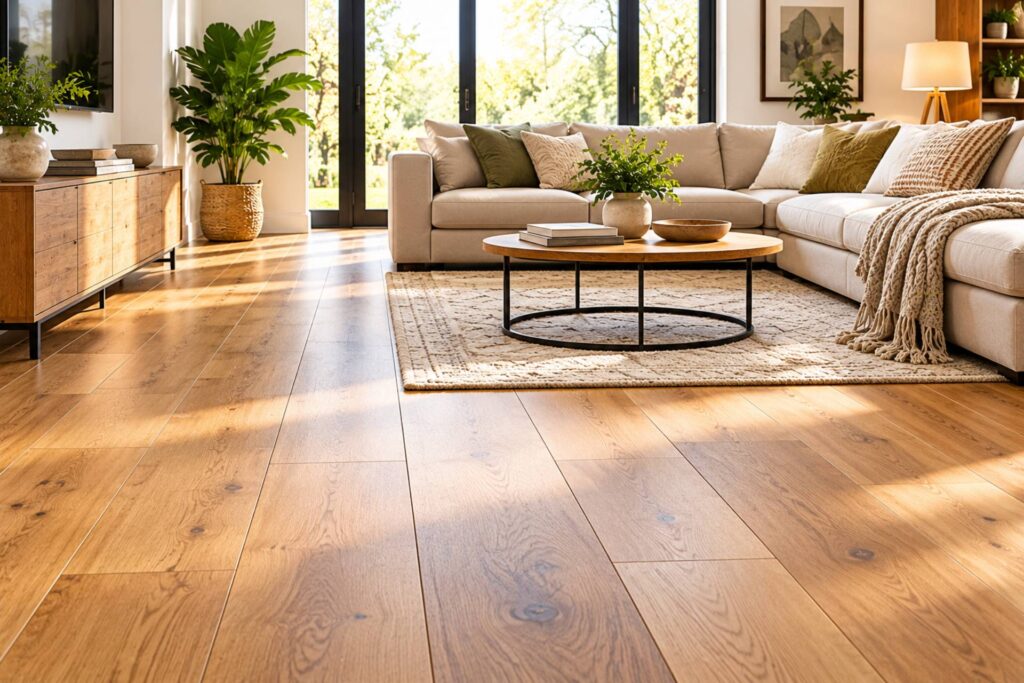
Flooring covers one of the largest visible surfaces in a home, so changing it can make a room feel completely different. The right floor can make a small room appear brighter, bring warmth to a plain space, create contrast with furniture, or give several rooms a more consistent appearance.
Choosing a floor should not be based on appearance alone. Daily foot traffic, cleaning needs, moisture, pets, children, room size, and available natural light all matter. Investing in quality flooring that suits the way a room is actually used can help you create a home that looks good while remaining practical for everyday life.
Start With the Overall Style of Your Home
Before comparing materials, think about the atmosphere you want to create. A traditional home may suit warm timber tones, while a modern property can work well with large tiles, pale wood, polished concrete effects, or clean neutral finishes.
Flooring should also work with walls, furniture, lighting, and architectural details rather than being chosen separately. Looking at the wider principles of interior design can help you understand how color, texture, proportion, and room flow work together.
Try bringing flooring samples into the actual room before making a decision. A shade that looks warm in a showroom can appear cooler under the lighting in your home. Check samples during the morning, afternoon, and evening whenever possible.
Bring Natural Warmth With Wood Flooring
Wood remains one of the easiest ways to introduce warmth and character into a room. Its natural grain creates visual interest without making the space feel overly decorated.
Oak and other neutral wood tones work particularly well because they can complement both traditional and contemporary furniture. Pale wood can make a compact room feel lighter, while medium and darker tones can give larger rooms more depth.
The direction of the boards also affects how a space looks. Running planks along the longest dimension of a room can emphasize its length. Wider boards can create a calmer appearance because there are fewer visible joins across the floor.
Wood also ages naturally, which can add character rather than making the floor immediately appear dated.
Consider Laminate for an Affordable Refresh
Homeowners who like the appearance of wood but want a different price point have plenty of alternatives. Modern laminate flooring is available in designs that reproduce different wood grains, colors, and plank sizes while offering straightforward everyday maintenance.
It can work particularly well in bedrooms, living rooms, dining rooms, hallways, and other spaces where you want the visual warmth of timber without necessarily using solid wood.
Look beyond color when comparing products. Texture, plank size, edge detailing, surface finish, moisture rating, and wear resistance can all affect how convincing and practical the finished floor feels.
A simple oak-effect finish can create a relaxed background for changing furniture and decor, while darker designs can give a room a stronger visual identity.
Make a Statement With Patterned Floors
Flooring does not always need to disappear into the background. Patterns can turn the floor itself into an important design feature.
Herringbone and chevron layouts are especially effective in entrance halls, dining areas, and larger living rooms. Their repeated angles lead the eye across the room and can add movement to an otherwise simple space.
Pattern does not have to mean using bold colors. A herringbone floor in a natural wood tone can create interest while remaining understated.
If you choose a strong flooring pattern, consider keeping large furniture pieces and wall colors relatively simple. This prevents several features from competing for attention at the same time.
Use Large Tiles to Create a Cleaner Look
Large-format tiles can give kitchens, bathrooms, open-plan areas, and entrances a clean and spacious appearance. Fewer grout lines mean there are fewer visual interruptions across the floor.
Stone-effect porcelain can introduce the appearance of limestone, marble, or concrete while offering a surface suitable for many busy areas of the home.
Tile color can also influence the character of a room. Pale beige and warm gray shades tend to create a soft, relaxed appearance, while darker charcoal tones can produce stronger contrast against light cabinetry or walls.
The size of the room should still be considered. Very large tiles may require careful planning in small or unusually shaped spaces to avoid awkward cuts around edges and fixtures.
Make Small Rooms Feel Bigger With Lighter Floors
Floor color can change how spacious a room feels.
Light wood, pale stone, soft beige, and warm off-white surfaces reflect more available light than very dark flooring. This can be particularly useful in narrow hallways, small bedrooms, apartments, and rooms with limited windows.
Keeping the floor similar in tone between adjoining rooms can also create better visual continuity. Instead of every doorway marking an obvious change in material or color, the eye moves naturally from one area to another.
That does not mean every room must have identical flooring. Coordinating colors can achieve a similar effect while allowing you to select materials suited to different conditions.
Add Depth With Dark Flooring
Dark floors can be highly effective when they are used in the right setting.
Deep brown wood, walnut tones, charcoal tiles, and dark stone effects can make light-colored furniture and walls stand out. They work especially well in larger rooms with plenty of natural light.
Contrast is important. A dark floor combined with dark walls and heavy furniture can make some spaces feel smaller. Pairing it with cream walls, pale upholstery, natural textiles, and good lighting creates a more balanced result.
Dark flooring may also show dust or light-colored pet hair more easily, so everyday maintenance should be considered before choosing a very deep shade.
Introduce Comfort With Carpet
Hard flooring is not always the best answer for every room. Carpet still has an important role where softness, warmth, and comfort matter.
Bedrooms are an obvious example. A soft floor feels comfortable underfoot in the morning and can help the room feel quieter and more restful. Carpet can also work in family rooms, staircases, and upper floors where reducing footstep noise is useful.
Neutral carpet does not have to look plain. Different fibers, loops, piles, and subtle patterns can add texture without using strong colors.
For a timeless result, consider warm neutrals rather than choosing a shade simply because it is currently fashionable.
Use Rugs to Change the Floor Without Replacing It
Replacing an entire floor is not always necessary. A carefully chosen rug can change how an existing surface looks at a much lower cost.
In a living room, a large rug can define the seating area and connect sofas, chairs, and tables visually. In a bedroom, placing a generous rug beneath the bed can add softness and introduce color or texture.
Scale matters. A rug that is too small can make furniture appear disconnected. Choosing one large enough for at least the front legs of the main furniture pieces to sit on it usually creates a more unified appearance.
Rugs are also useful when you want to experiment with stronger colors or patterns without making a permanent flooring decision.
Create Flow Between Open-Plan Spaces
Open-plan homes need particular care because several functional areas may be visible at once.
Using one floor throughout the main space is often the simplest way to create continuity. The kitchen, dining area, and living space can then be separated through furniture placement, rugs, lighting, or changes in wall color rather than abrupt flooring transitions.
When different flooring materials are necessary, choose finishes that relate to each other. For example, warm stone-colored kitchen tiles can sit comfortably beside natural oak flooring if the undertones are similar.
Transitions should feel deliberate rather than accidental.
Think About Maintenance Before Choosing
A beautiful floor can quickly become frustrating if it does not suit your lifestyle.
Busy entrances need surfaces that can cope with regular foot traffic. Kitchens and bathrooms require careful consideration of moisture. Homes with pets may benefit from finishes that are easier to clean and less likely to show minor marks.
Also consider how much maintenance you are prepared to do. Some natural materials require periodic treatment, while many manufactured surfaces need relatively simple routine cleaning.
Think several years ahead rather than choosing solely for the first impression. Flooring is normally expected to remain in place much longer than paint colors, cushions, curtains, and many pieces of furniture.
Do You Need the Same Flooring Throughout the House?
Not necessarily. Using exactly the same flooring everywhere can create continuity, but each room has different practical demands.
A better approach is often to select a coordinated palette. You could use wood or wood-effect flooring through living spaces, carpet in bedrooms, and complementary tile in bathrooms.
Repeating similar colors or undertones helps different materials feel connected.
Frequently Asked Questions
What flooring makes a room look bigger?
Light-colored floors, longer planks, larger tiles, and flooring that continues into adjoining areas can make a room appear more open. Keeping strong visual breaks to a minimum can also improve the sense of space.
Should flooring be lighter or darker than the walls?
Either approach can work. Light walls with darker flooring create clear contrast, while pale flooring and pale walls can make a room feel brighter and more spacious. The best combination depends on room size, natural light, furniture, and the atmosphere you want.
What flooring works best for a modern home?
Wood, wood-effect products, large-format porcelain, concrete-effect finishes, and simple neutral flooring all work well in modern interiors. Clean lines and restrained colors usually create the strongest result.
Can different flooring be used in adjoining rooms?
Yes. Different materials can work well together when their colors, undertones, and overall styles are coordinated. A neat transition between materials is also important.
Is replacing flooring enough to change the appearance of a room?
It can make a major visual difference because flooring covers such a large surface. However, the strongest results usually come when the new floor also works with the wall colors, furniture, lighting, and textiles already in the room.
A Fresh Foundation for Your Home
Flooring can influence almost every aspect of how a room looks and feels. Natural wood can add warmth, patterns can introduce personality, light surfaces can increase the sense of space, and carefully chosen tiles can give busy rooms a clean, practical finish.
The best choice is not simply the most fashionable material. Consider how each room is used, how much maintenance you want, the amount of natural light available, and how the floor will work with the rest of your home. When those practical and visual factors come together, a new floor can transform a room without requiring a complete redesign.