
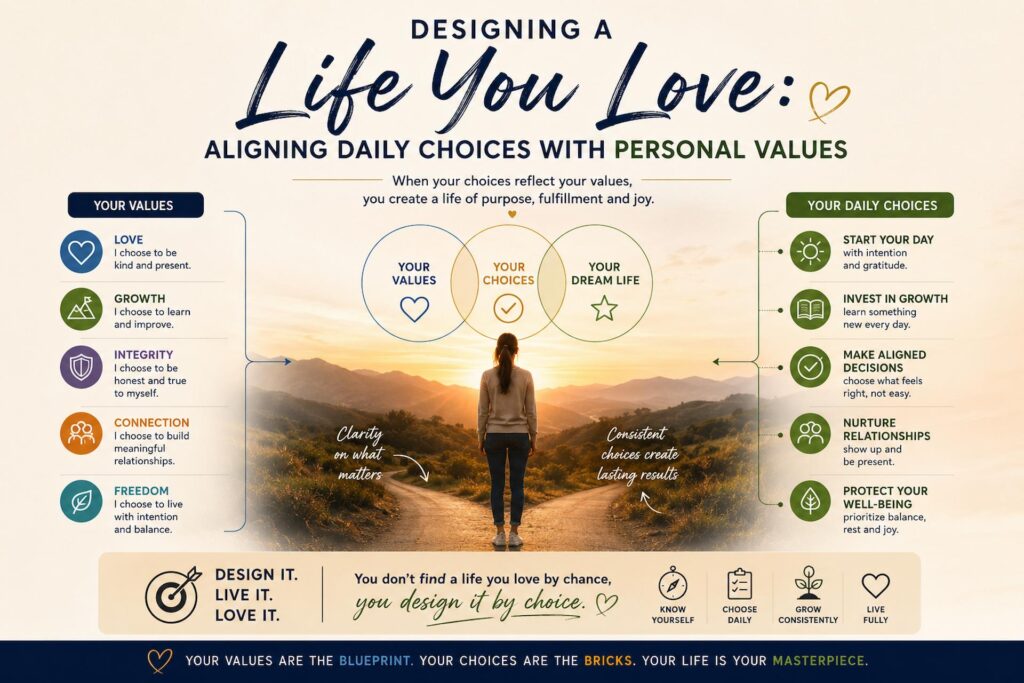
A fulfilling life doesn’t happen by chance. It is built through intentional choices aligned with personal values. This article explores how self-awareness shapes decisions, how to identify what truly matters, and how to design a lifestyle that reflects your goals, priorities, and long-term sense of purpose and clarity.
Why Personal Values Shape the Life You Experience
Every decision you make, even small ones, shapes your life direction. What you choose to prioritize becomes your reality over time.
This is where personal values clarity becomes important. Values act like internal guidelines. When they are clear, decisions become easier. When they are unclear, life feels scattered and reactive.
People often chase goals that don’t match what they truly care about. This creates frustration, even when success is achieved. Alignment is what turns achievement into fulfilment.
For example, someone who values freedom but chooses a highly restrictive lifestyle may feel constantly drained. On the other hand, when values and actions match, life feels more stable and meaningful.
Key Takeaways
- Personal values shape happiness, direction, and decision-making.
- Self-awareness is the foundation of intentional living.
- Clear priorities help reduce distraction and mental overload.
- Small daily choices reflect long-term life design.
- Reflection practices improve clarity and consistency in actions.
- Alignment between values and behavior leads to lasting fulfilment.
Building Self-Awareness Before Making Life Changes
You cannot design a life you love without first understanding yourself. Self-awareness is the starting point of every meaningful change.
One useful method is journaling daily decisions. Write down:
- What you chose
- Why did you choose it
- How did it make you feel afterwards
Over time, patterns appear. These patterns reveal what actually matters to you versus what you think should matter.
This practice strengthens self-awareness habits, helping you recognize emotional triggers, energy drains, and meaningful experiences.
Another simple exercise is asking yourself:
- What gives me energy?
- What consistently drains me?
- What moments make me feel proud?
Honest answers reveal more than long-term planning ever could.
How to Identify Your Core Values
Most people have dozens of preferences, but only a few core values that truly guide their lives.
To identify them, start by reviewing peak experiences. Think about moments when you felt deeply satisfied or proud.
Then look for common themes such as:
- Creativity
- Stability
- Growth
- Family connection
- Independence
- Health
These are signals of core values identification.
Once identified, rank them. You don’t need perfect balance. You need clarity about what comes first when trade-offs appear.
A useful question is: “What would I protect even if life became difficult?” The answer often points directly to your real values.
Turning Values into Daily Decisions
Values only matter when they influence action. Otherwise, they remain ideas without impact.
Start by connecting each value to a daily behavior.
For example:
- Value: Health → Daily walk or balanced meals
- Value: Growth → Reading or learning new skills
- Value: Relationships → Intentional time with loved ones
This process creates intentional decision making, where choices are guided instead of being random.
Even small actions matter. A 10-minute habit repeated daily can reflect a core value more than a great but rare effort.
The goal is consistency, not perfection.
Eliminating Distractions That Pull You Away from Your Values
Modern life is full of distractions that slowly disconnect people from what they care about.
Social media, overcommitment, and unnecessary obligations often replace meaningful time.
To reduce this, begin with awareness:
- Track where your time goes for one week
- Identify activities that feel empty or draining
- Notice patterns of avoidance
This supports value-based lifestyle design, helping you see what does not belong in your routine.
Then remove or reduce low-value activities. You don’t need to eliminate everything. Even small reductions create space for better alignment.
For example, reducing one hour of scrolling can create time for exercise, reading, or rest.
Designing a Lifestyle That Reflects Your Priorities
Once you understand your values, the next step is structure.
A well-designed life is not random. It is built through consistent systems that support what matters most.
This includes:
- Time allocation based on priorities
- Energy management throughout the day
- Clear boundaries in work and relationships
This is where intentional living strategies become practical.
For example, if family is a core value, schedule non-negotiable time with them. If health is a priority, plan meals and movement.
Design removes guesswork. It replaces reaction with intention.
Reflection Techniques That Strengthen Clarity
Reflection is one of the most powerful tools for alignment. It helps you adjust before misalignment becomes a habit.
Try these simple techniques:
Weekly Review
Ask:
- What felt meaningful this week?
- What felt off?
- Where did I ignore my values?
Evening Check-In
Spend two minutes reviewing:
- One good choice you made
- One choice you would adjust
Monthly Reset
Evaluate whether your lifestyle still matches your priorities.
These habits strengthen values-based decision making, helping you stay consistent without overthinking.
Aligning Work, Relationships, and Personal Growth
A value-aligned life shows up in every area.
Work
Choose roles or tasks that match your strengths and long-term direction. If growth matters, seek learning opportunities. If stability matters, prioritize structured environments.
Relationships
Spend time with people who support your values. Healthy relationships reinforce who you want to become.
Finances
Money decisions should reflect priorities. Spending intentionally reduces stress and increases control.
Health
Daily habits like sleep, movement, and nutrition reflect how much you value your well-being.
Personal Development
Continuous learning strengthens identity and expands opportunity.
Alignment across these areas creates consistency in life satisfaction.
Overcoming Misalignment Without Starting Over
Many people think they need a full reset to change direction. That is rarely true.
Small corrections are more sustainable.
Start by adjusting one area at a time:
- Change one habit
- Redesign one routine
- Remove one distraction
- Add one value-based action
This approach supports purpose-driven lifestyle design, where improvement happens gradually without pressure.
Setbacks will happen. The key is returning quickly to alignment, not achieving perfection.
How to Stay Aligned Long-Term
Consistency comes from simplicity.
Keep your values visible. Write them down. Revisit them often. Let them guide decisions, especially during uncertainty.
Also, reduce complexity in your daily system. The simpler your routine, the easier it is to stay aligned.
Ask yourself regularly:
- Does this choice support my values?
- Will this matter in a year?
These questions bring clarity in moments of distraction.
Over time, alignment becomes natural. You stop forcing decisions and start recognizing what feels right.
Final Thoughts
Designing a life you love is not about perfection or dramatic change. It is about awareness, clarity, and steady alignment between what you believe and what you do.
When your daily choices reflect your values, life becomes more grounded and meaningful. You stop reacting to circumstances and start shaping your direction with intention.
The process is ongoing, but every small aligned decision builds a stronger foundation for the life you actually want.